In Singapore, children encounter engineering every day without always recognising it. They press a lift button, watch the doors open, step inside and arrive at another floor within seconds. To most students, it feels ordinary. Yet behind that everyday movement are gears, motors, circuits, load handling, safety logic, energy use and design thinking.
That is why an Electric Lift Model Workshop is more than a fun classroom activity. It gives students a chance to slow down, observe a familiar machine, and ask: How does this actually work? In a country where STEM learning is closely linked to future work, sustainability and innovation, hands-on engineering workshops help students connect science lessons with real systems around them.
Ecoponics’ Electric Lift Model Workshop is designed for primary and secondary school students, with a two-hour format available virtually or face-to-face in schools. Students learn about lifts, power sources, gears and then build their own electric lift model using a DIY STEM kit.
Why Electric Lift Models Make Engineering Easier to Understand
Engineering can feel abstract when it is only explained through diagrams or textbook definitions. A lift model changes that. Students can see movement, adjust parts, observe cause and effect and understand why small design choices matter.
Turning a Familiar Machine Into a Learning Tool
Lifts are part of daily life in Singapore’s HDB blocks, schools, malls, hospitals, and offices. Because students already know what a lift does, the workshop can focus on how it works. This makes the learning experience more relatable than starting with a completely unfamiliar machine.
A lift model introduces students to core engineering ideas such as:
- How gears transfer motion and change speed or force
- How electrical energy can be converted into mechanical movement
- Why stable structures matter when carrying a load
- How design problems are solved through testing and adjustment
This is the kind of activity that helps students move from memorising science terms to applying them.
The Singapore Context: Why Hands-On STEM Matters Now
Singapore’s science education direction is not only about scoring well in exams. MOE’s Primary Science Syllabus highlights the goal of building a strong foundation in science for “life, learning, citizenry, and work,” guided by the ideas of inspiring students, encouraging inquiry and supporting innovation.
This matters because future-ready students need more than facts. They need to ask questions, test ideas, work with others, and understand systems. MOE has also stated that more than half of Singapore’s secondary schools offer STEM-related Applied Learning Programmes, giving students hands-on opportunities to see how classroom learning connects to real-world settings.
Singapore students already perform strongly in international assessments. In PISA 2022, Singapore had high proportions of top performers in mathematics and science, and MOE noted that students showed strength in reasoning, computational thinking and solving complex problems in modern contexts. But workshops like electric lift modelling add something exams cannot fully measure: the confidence to build, troubleshoot and improve a working object.
What Students Actually Learn in an Electric Lift Model Workshop
A well-designed electric lift activity is not just about assembling parts. The value comes from understanding what each part does and why it matters.
Gears: Small Parts With Big Engineering Lessons
Gears are often hidden inside machines, but they are central to motion control. In a lift model, students can see how gears affect movement. They learn that machines are not powered by “magic”; movement is managed through carefully chosen components.
For example, if the lift moves too quickly, students can discuss how gear ratios influence speed. If the lift struggles to move, they can think about friction, load, motor power or alignment. This turns a simple model into a problem-solving exercise.
Electricity and Motion Working Together
The electric lift model also introduces the relationship between circuits and mechanical movement. Students can observe how electrical energy powers a motor and how the motor creates movement through connected parts.
This helps students understand everyday devices more deeply. Fans, toys, escalators, electric gates, robotics kits and automated systems all rely on similar principles: energy input, controlled movement and mechanical design.
Troubleshooting Builds Real Confidence
One of the most valuable parts of a STEM workshop is when something does not work immediately. A loose connection, weak alignment or unstable structure becomes a learning moment. Instead of seeing failure as a mistake, students learn to diagnose the issue.
That habit is essential in engineering. Real engineers rarely get perfect results on the first try. They test, observe, adjust and test again.
How Electric Lift Workshops Support Different Age Groups
Ecoponics identifies the workshop as suitable for both primary and secondary school students. That flexibility is important because the same model can support different levels of learning.
For Primary Students: Curiosity and Observation
Younger students benefit from seeing a direct link between action and result. When they connect components and watch the lift move, they begin to understand cause and effect. The activity also supports fine motor skills, patience, teamwork and basic scientific vocabulary.
At this level, the focus should be on questions such as:
“What makes the lift go up?”
“What happens if the parts are not aligned?”
“Why does the lift need a stable frame?”
For Secondary Students: Systems Thinking and Design Improvement
Older students can go deeper into forces, torque, gear ratios, energy transfer, and design constraints. They can compare different ways to power a lift, think about efficiency and discuss how real lifts need safety systems.
This makes the workshop relevant not only to science, but also to design and technology, engineering pathways, robotics and sustainability-related innovation.
Why This Workshop Matters for Schools and Educators
For schools, enrichment activities need to do more than entertain. They should support learning outcomes, fit into the timetable, be safe and provide clear value for students.
Ecoponics’ Electric Lift Model Workshop is structured as a two-hour session, with a minimum group size of 15, and can be conducted through Zoom or face-to-face in school. The programme highlights include learning about lifts, identifying different ways to power a lift, understanding gears and gear types and building an electric lift model.
Practical Benefits for Schools
- Curriculum connection: The workshop links naturally to electricity, energy conversion, forces, systems and simple machines.
- Student engagement: Building a working model keeps students active rather than passive.
- Collaborative learning: Students can discuss problems, share observations and improve their models together.
- Accessible engineering exposure: It introduces engineering concepts without requiring advanced tools or complex lab equipment.
- Flexible delivery: Virtual and in-school options make planning easier for different school needs.
For teachers, the model also creates useful post-workshop discussion opportunities. Students can compare their lift model with lifts in real buildings, escalators, cranes, pulleys and automated transport systems.
The Sustainability Link: Engineering for Smarter Cities
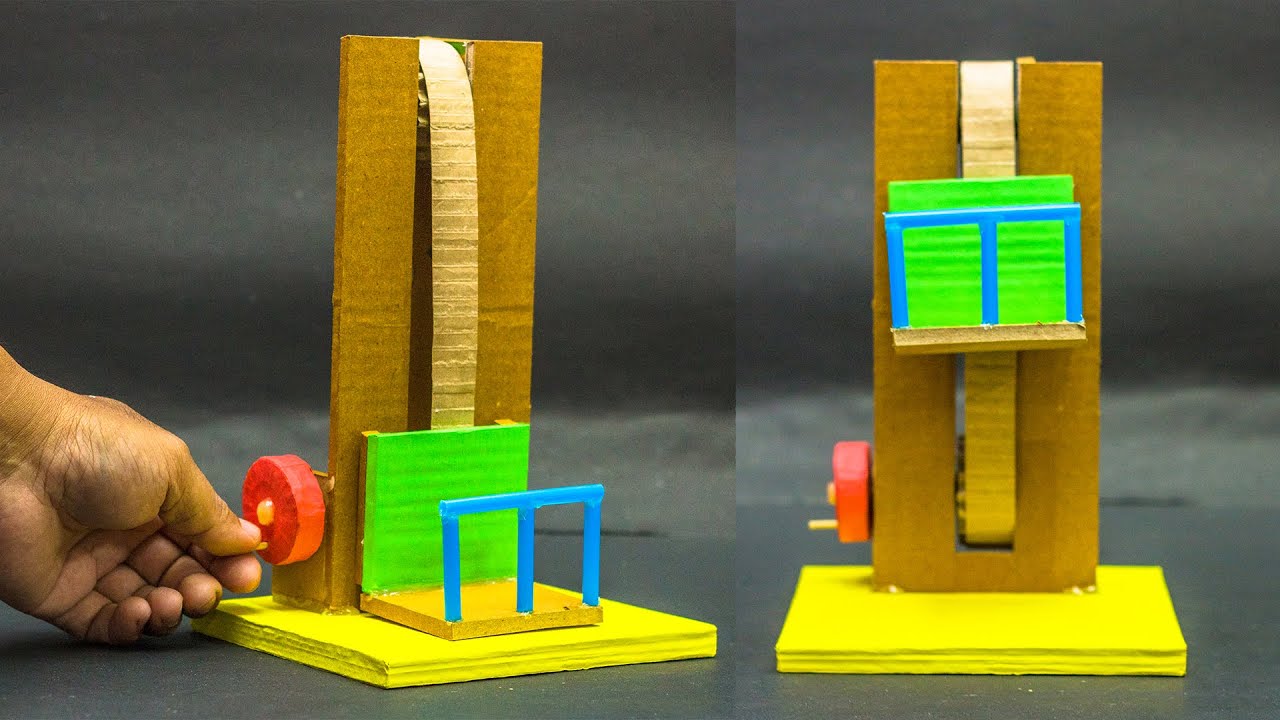
At first glance, an electric lift model may look like a pure engineering activity. But in Singapore’s wider context, it also connects to sustainability and urban living.
Singapore’s Green Plan 2030 is a whole-of-nation movement to advance sustainable development, with targets that include reducing waste sent to landfill by 30% by 2030 and having at least 20% of schools become carbon neutral by 2030. When students learn how machines use energy, they also begin to understand why efficient design matters.
A lift is a good example. Real lift systems in buildings must balance movement, safety, speed, comfort, and energy consumption. Students may not design commercial lifts during a workshop, but they begin to think like future engineers: How can a system work better, use energy wisely and serve people safely?
This is especially relevant as Singapore prepares its workforce for a low-carbon economy. SkillsFuture Singapore reported in 2026 that the green transition is already reshaping job roles, business models and workforce needs, with strong near-term demand in areas such as energy and sustainability reporting. Early STEM exposure helps students see how engineering, sustainability and future careers are connected.
What Makes a Strong Electric Lift Model Workshop
A good workshop is not judged only by whether students bring home a completed model. The real measure is whether students understand what they built and can explain it in their own words.
Key Features to Look For
The best electric lift workshops usually include:
Clear explanation before building, so students know the purpose of each part.
Guided assembly, so students do not feel lost or rushed.
Time for testing, because troubleshooting is where deep learning happens.
Reflection questions, so the activity connects back to science concepts.
Age-appropriate facilitation, especially when working with mixed ability groups.
Ecoponics also highlights MOE-certified instructors, hands-on learning, and experience working with more than 100 schools in Singapore, which can be useful credibility signals for educators planning school-based enrichment.
Real-World Scenarios Students Can Connect With
The strongest STEM learning happens when students can connect the activity to real situations. An electric lift model opens up many practical conversations.
A student living in an HDB block can think about why lifts must be reliable for elderly residents and families with prams. A student who visits shopping malls can observe how vertical transport supports crowd movement. A student interested in robotics can connect the lift’s motor and control system to automated machines. A student thinking about sustainability can ask how buildings reduce energy use while keeping transport systems efficient.
These examples help students understand that engineering is not only about machines. It is about designing systems that solve human problems.
Actionable Takeaways for Parents, Teachers, and Programme Planners
For anyone considering an Electric Lift Model Workshop in Singapore, the goal should be meaningful learning, not just a completed craft.
Parents can use the activity to encourage children to notice how everyday machines work. Teachers can connect the model to topics such as electricity, forces, energy and systems. Schools can use the workshop as part of STEM enrichment, Applied Learning, post-exam activities or science week programmes. Programme planners can position it as a practical introduction to engineering for mixed-age groups.
Most importantly, students should leave with three outcomes: they built something, they understood why it worked and they became more curious about the machines around them.
Conclusion: Curiosity Is the First Step Toward Engineering Thinking
Electric lift model workshops show students that engineering is not distant or difficult to access. It is already present in the buildings they enter, the buttons they press and the machines they trust every day.
By building a working model, students learn about gears, electricity, motion, structure and problem-solving in a way that feels real. In Singapore’s education landscape, where science learning is increasingly connected to inquiry, innovation, sustainability and future skills, this kind of hands-on workshop has lasting value.
The future will need people who can understand systems, improve designs, and think carefully about how technology serves society. An electric lift model may be small, but the mindset it develops is big: observe closely, ask better questions, test ideas and keep improving.
FAQs
What is an Electric Lift Model Workshop?
It is a hands-on STEM workshop where students build a working lift model and learn about gears, electricity, motion and engineering design.
Who is the workshop suitable for?
It is suitable for primary and secondary school students, especially those learning science, simple machines, electricity or basic engineering concepts.
How long is the Ecoponics Electric Lift Model Workshop?
The workshop runs for 2 hours, according to Ecoponics’ programme details.
Can the workshop be conducted in school?
Yes. Ecoponics offers face-to-face workshops in schools and virtual sessions via Zoom.
What do students gain from this workshop?
Students gain hands-on building experience, a clearer understanding of gears and powered movement and stronger problem-solving confidence.