Food waste is no longer a side issue in sustainability. UNEP says the world generated 1.05 billion tonnes of food waste in 2022, equal to 132 kg per person, and 60% of that waste happened at household level. UNEP also links food loss and waste to roughly 8–10% of annual global greenhouse-gas emissions. In the United States, EPA says food waste makes up about 24% of municipal solid waste disposed in landfills, yet it drives an estimated 58% of fugitive methane emissions from those landfills because it decays so quickly.
That context explains why appliances like the Smart Cara PCS500 matter. Their value is not that they magically “solve composting.” Their real value is more practical: they make food waste smaller, drier, cleaner, less smelly, and easier to handle indoors, which is often the difference between people actually separating organics and just throwing everything into the trash. Public-facing Smart Cara materials describe the PCS500 as a drying, grinding, and cooling system that turns scraps into dry residue or “secondary compost.”
Why this product category matters more in 2024–2026
The food-waste conversation has shifted from awareness campaigns to practical, measurable reduction tools. UNEP’s 2026 food-waste coverage highlights digital and AI-based systems that help households, retailers, and hotels reduce waste before it becomes garbage, and UNEP’s Food Waste Breakthrough aims to halve food waste by 2030 while cutting methane emissions by up to 7%. That makes source-level technologies more relevant than they were a few years ago.
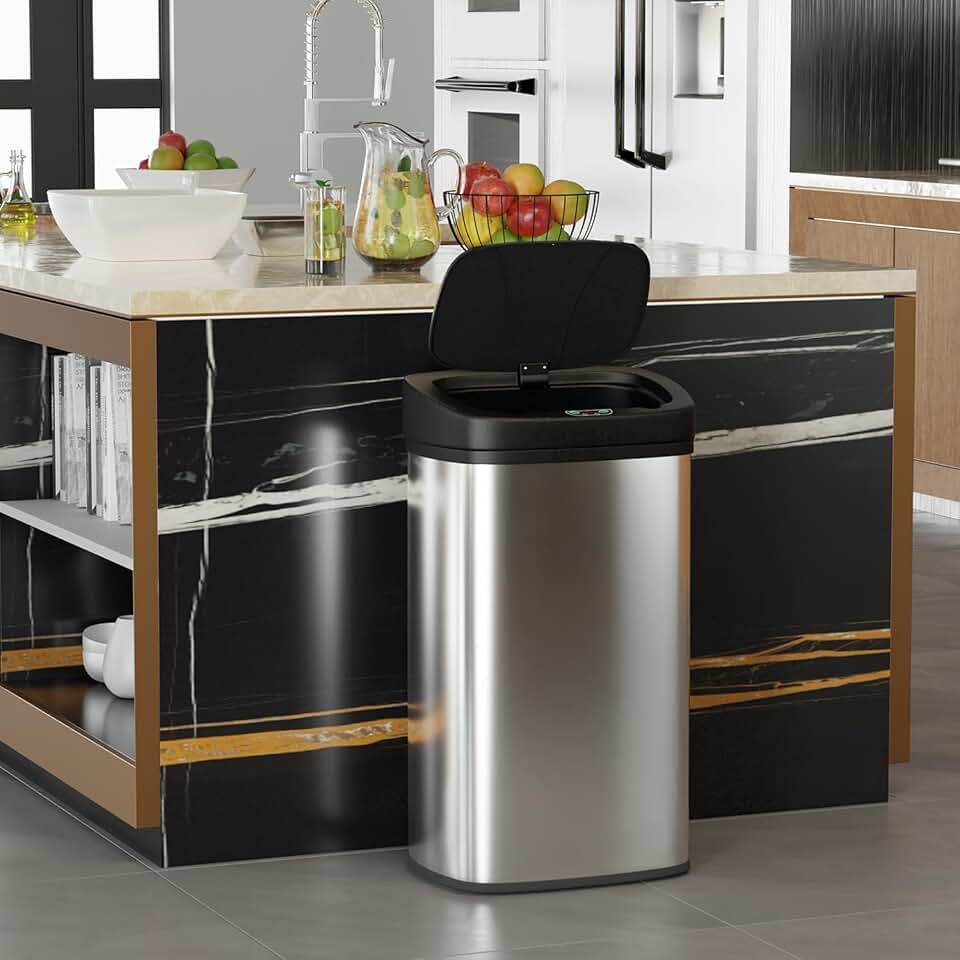
In that landscape, Smart Cara sits in an important middle ground. It is not a municipal-scale recycling system and it is not a full biological composter. It is a kitchen-side waste-conditioning appliance designed to reduce the mess and friction of handling food scraps. That may sound modest, but from a behavior-change perspective it is exactly where many households fail: wet scraps smell, attract flies, leak, and feel unpleasant to store. Smart Cara’s design is clearly built around removing those pain points.
What Smart Cara PCS500 actually is
One thing worth noting up front is that the product naming varies across markets. Some distributor pages market the unit as Smart Cara PCS500 with a 5 kg capacity, while the manual for the closely related PCS-500D / Smartcara Innovation lists an approx. 4-liter operation capacity, 20 kg unit weight, and 340 x 372 x 727 mm dimensions. That suggests buyers should treat “PCS500” as a product family name and verify the exact SKU they are being quoted.
This is also not an anonymous gadget brand. SmartCara’s official recognition page lists the brand as a government-certified eco-friendly product and says it ranked 1st in the 2023 Korea Brand Power Index for the food-waste-disposal category. That does not prove the PCS500 is perfect, but it does suggest the product line sits inside a more established category rather than a one-off novelty appliance.
The smart eco stack inside the PCS500
What makes the PCS500 interesting is not one headline feature. It is the way several systems are layered together:
- Storage mode lets food waste sit in the receptacle while volume slowly decreases; the manual says it can be stored for up to 6 days under the right powered conditions.
- Dry sterilization uses heating to remove moisture; Smart Cara materials say this helps eradicate bacteria, and the official site claims 99.9% bacteria removal.
- Grinding follows drying, using a 3-part impeller / low-RPM approach on some PCS500D listings to pulverize residue, including softer bones like chicken bones.
- Cooling is the third process stage, making the output safer and cleaner to handle after drying and grinding.
- Deodorization relies on a triple-layer eco-filter and activated-carbon-based odor control.
- Self-cleaning and self-diagnosis add usability: the unit has a cleansing cycle, audio guidance, and error narration.
That combination is the real “smart eco technology.” The eco part is obvious: less wet waste going to trash. The smart part is that the machine tackles the actual reasons people avoid food-waste separation in the first place: odor, moisture, bacteria, pests, cleanup, and uncertainty about operation.
Drying is the core technology, not a side feature
The most important engineering move in the PCS500 is moisture removal. Wet food waste is heavy, unstable, and smell-prone. By dehydrating it first, the machine reduces the material’s weight and volume and makes the next stages more effective. Published reduction claims vary: the PCS-500D specification page lists an approx. 81% reduction rate, while seller pages market up to 80–90% reduction. That spread is not unusual in this category; it likely reflects different test loads and whether the claim refers mainly to weight, volume, or a best-case wet scrap mix.
This is why the machine’s eco logic is stronger than it first appears. Drying scraps at source does not just make the bin look neat. It changes the waste stream itself. Drier residue is less attractive to flies, easier to store temporarily, and far less unpleasant in apartments, offices, and shared kitchens. Smart Cara’s own product pages explicitly connect storage mode with reduced odor and the absence of maggots and fruit flies.
Grinding turns bulky scraps into manageable output
After drying, Smart Cara shifts to grinding. Distributor and manual materials describe the method as Dry & Grind, and some PCS500D listings emphasize a patented 3-part impeller with low RPM. That matters because low-speed grinding is usually a better fit for indoor appliances: it aims for enough torque to break down dried material without the harsher noise and vibration you would expect from a more aggressive high-speed approach.
Public noise claims also support that indoor-use positioning, although they vary by source. The official SmartCara English site says the appliance averages 26.5 dB, while a PCS500 distributor page says ≤40 dB. The exact number is less important than the design intent: this product is clearly engineered to live in a kitchen, not in a utility shed.
Odor control is a bigger innovation than most buyers realize
Many food-waste appliances succeed or fail on odor management, not on shredding ability. Smart Cara’s official site says the unit uses a triple-layer Eco-filter, and official filter pages describe activated carbon formulations designed to capture the odors created during food-waste treatment. That is important because a dehydrator that still smells bad has already failed the adoption test for most households.
There is also a practical ownership lesson here: consumables matter. SmartCara’s official PCS-500 filter guidance says that with operation about twice a week, filters should be replaced every 3 months, while some distributor pages advertise much longer intervals depending on use. The exact interval will vary, but the core point is simple: odor control is not free. It depends on the filter staying within performance range.
What the output really is and why that distinction matters
This is where a lot of marketing around this category becomes fuzzy. Smart Cara seller pages describe the result as dry residue, secondary compost, or a soil improver. One FAQ is especially useful because it says the unit does not use microbes, so the output is considered secondary compost, meaning nutrients are not immediately absorbed by plants and the material still needs natural decomposition in soil.
That is an important expert-level distinction. A PCS500-style machine is best understood as a pre-composting or residue-conditioning system, not a full substitute for mature biological compost. It dramatically improves hygiene, storage, and volume reduction, but it is not doing the same job as a long-duration compost pile, bokashi system, or industrial composting operation. In practical terms, that makes it highly useful for kitchens but buyers should not confuse “garden-safe residue” with “finished compost.”
Where the PCS500 makes the most sense
The strongest real-world fit is not universal. It is best in situations like these:
- Urban households and apartments that need an indoor, stand-alone way to stabilize scraps before disposal or soil use. SmartCara positions the system as a stand-alone indoor appliance with odor control and quiet operation.
- Large households or shared kitchens generating steady food scraps. Distributor pages market PCS500 specifically for large household or commercial use.
- Users who want cleaner handling more than “perfect compost.” The machine’s biggest win is reducing wet, smelly mass into dry output in a few hours.
It is less compelling for people who already have easy access to a reliable municipal organics program and do not mind storing scraps separately. In those cases, the environmental math shifts: the appliance still offers convenience, but its biggest advantage becomes user experience rather than necessity. That is an inference from how the machine is designed and from the broader fact that preventing landfill disposal is the key climate benefit.

What smart buyers should verify before purchase
Because public listings for the PCS500 family are not perfectly consistent, smart buyers should confirm a few things before ordering:
- Exact model name: ask whether the unit is PCS500, PCS-500D, or Innovation 4L.” Public listings use all three.
- True working capacity: some pages say 5 kg, the manual says approx. 4 liters per cycle. Those are not the same metric.
- Reduction claim basis: published numbers range from about 81% to up to 90%. Ask what waste mix the seller is referring to.
- Waste compatibility: the manual allows chicken bones but warns that frequent bone processing may shorten receptacle life, and it warns against firm bones and non-food materials.
- Placement and steam clearance: the manual recommends keeping surfaces at least 30 cm from the rear steam vent.
Those checks are not nitpicking. They are the difference between buying the right indoor food-waste system and buying based on a simplified marketing promise.
The bigger future trend: from processing waste to preventing it
The smartest insight from 2024–2026 is that the category is moving beyond waste treatment into waste prevention. UNEP’s 2026 coverage shows AI and digital tools being used to track waste, adjust purchasing, improve storage behavior, and reduce plate waste. In commercial kitchens, UNEP says Winnow systems are installed in more than 3,000 kitchens, and a UNEP-Hilton pilot cut post-consumer breakfast waste by 62% in 13 hotels over four months.
That matters for how we should think about the PCS500. Its current smartness is mostly mechanical and operational: storage mode, audio guidance, self-cleaning, sensors, odor filtering, and automatic process control. The next frontier for appliances like this is likely behavioral intelligence: telling users what they waste most, how often they run the machine, and how to waste less in the first place. In other words, the future winner in this category may not be the machine that dries scraps fastest, but the one that helps create fewer scraps to dry. That is an inference from UNEP’s current direction of travel on food-waste tech.
Conclusion
The Smart Cara PCS500 is best understood as a smart residue-conditioning system built around a practical eco-design stack: storage, drying, sterilization, grinding, cooling, deodorization, and simplified cleaning. That combination addresses the real barriers that stop households and small shared kitchens from handling food waste properly: smell, bacteria, pests, wet mess, and inconvenience.
Its environmental value comes from making it easier to keep organics out of the trash stream at a time when food waste remains a major climate and methane problem worldwide. But the most honest reading is this: the PCS500 does not replace full composting biology. It makes food waste manageable, stable, and usable, which is exactly why it can be effective in the real world. As food-waste technology evolves through 2026 and beyond, the most successful products will be the ones that combine this kind of low-mess physical processing with the next layer of intelligence: measurement, habit change, and prevention.
FAQs
What is Smart Cara PCS500?
Smart Cara PCS500 is a food waste processor that dries, grinds, and cools kitchen scraps to reduce odor, weight, and volume.
How does Smart Cara PCS500 help the environment?
It helps by reducing wet food waste before disposal, which can lower landfill waste and methane-related impact.
Does Smart Cara PCS500 make real compost?
Not exactly. It creates dry residue or secondary compost material, which still needs natural decomposition in soil.
How much can the PCS500 reduce food waste volume?
Depending on the waste type, it can reduce food waste by around 80% to 90%.
Is the Smart Cara PCS500 suitable for apartments?
Yes, it is designed for indoor use and is especially useful in apartments because it helps control smell and mess.
How does the PCS500 control bad odors?
It uses a deodorizing filter system, often with activated carbon, to reduce unpleasant smells during operation.
Can the Smart Cara PCS500 handle bones?
It can process softer bones like chicken bones, but frequent bone use may affect the receptacle over time.