In a fast paced city like Singapore, people are often surrounded by screens, schedules, deadlines and indoor routines. Children spend long hours in structured learning environments, working adults deal with constant digital fatigue and families often look for meaningful activities that do more than simply fill time. This is where terrarium workshops stand out.
A terrarium workshop is not just a craft session. It is a calm, hands-on experience where participants build a miniature plant ecosystem inside a glass container. Through layers of gravel, moss, soil, plants and decorative elements, they create something living, personal and surprisingly educational.
In Singapore, this type of workshop also fits naturally into the country’s broader sustainability direction. The Singapore Green Plan 2030 places strong emphasis on becoming a City in Nature restoring nature into the urban environment and encouraging community involvement in sustainability efforts. For schools, companies and families, terrarium making offers a simple but powerful way to reconnect with nature in a compact, urban-friendly format.
Why Terrarium Workshops Are More Than Just a Craft Activity
At first glance, a terrarium may look like a decorative glass jar with plants inside. But the process of making one introduces participants to observation, patience, design thinking and environmental awareness.
Unlike many fast paced activities, terrarium making slows people down. Participants choose materials carefully, layer them in sequence, position plants gently and think about how moisture, air, light and soil interact. That quiet process makes the activity suitable for different age groups, from primary school students to adults attending a corporate team-building session.
Ecoponics’ Terrarium Making Workshop for example, introduces concepts such as photosynthesis, respiration and the water cycle, helping students understand how plants can survive in an enclosed environment. This turns a creative activity into a practical science lesson that participants can see touch and take home.
The Calming Effect of Working With Plants
Why hands-on nature activities support well-being
Research increasingly suggests that nature-based activities can support mental well-being. A 2024 meta-review on children and adolescents found that nature appears to have beneficial effects on mental health and well-being, although the authors also noted that more high-quality evidence is needed in some areas.
Horticultural therapy research shows a similar pattern. A 2023 systematic review and meta-analysis found evidence that horticultural therapy can help reduce stress, especially through structured activities involving plants, indoor environments and repeated engagement.
Terrarium workshops are not a replacement for therapy, but they borrow from the same calming principles: working with natural materials, focusing attention on a simple task and creating something living. For children, this can encourage focus and curiosity. For adults, it can offer a screen-free reset. For older participants, it can provide a gentle, low-pressure activity that does not require artistic expertise.
A mindful activity without feeling forced
Many people struggle with formal mindfulness practices because sitting still can feel uncomfortable or unfamiliar. Terrarium making offers a more natural route. Participants focus on texture, placement, colour, proportion and care instructions. The mind becomes engaged without pressure.
This is why terrarium workshops work well for mixed groups. A child may enjoy decorating the jar. A teenager may become interested in the science behind the ecosystem. A working adult may appreciate the quiet break from emails and meetings. A senior participant may enjoy the slow, tactile nature of arranging plants and soil.
A Mini Ecosystem That Makes Science Easy to Understand
One of the strongest educational benefits of terrarium making is that it makes abstract science visible. Instead of only reading about ecosystems, students build one.
In an enclosed terrarium, water evaporates, condenses on the glass and returns to the soil. This gives learners a small-scale model of the water cycle. Plants also demonstrate the relationship between light, moisture, air and growth. Ecoponics’ workshop specifically highlights how the terrarium’s water cycle can be related to the Earth’s water cycle.
This matters because children often learn best when they can connect concepts to real objects. A terrarium gives them a living example they can observe after the workshop. Over time, they may notice condensation, plant growth, soil moisture and changes in leaf health. These observations encourage scientific thinking in a simple and age-appropriate way.
What Participants Learn in a Terrarium Workshop
A well-designed terrarium workshop combines creativity, environmental education, and practical plant care. Participants are not simply following instructions; they are making decisions and understanding why each layer matters.
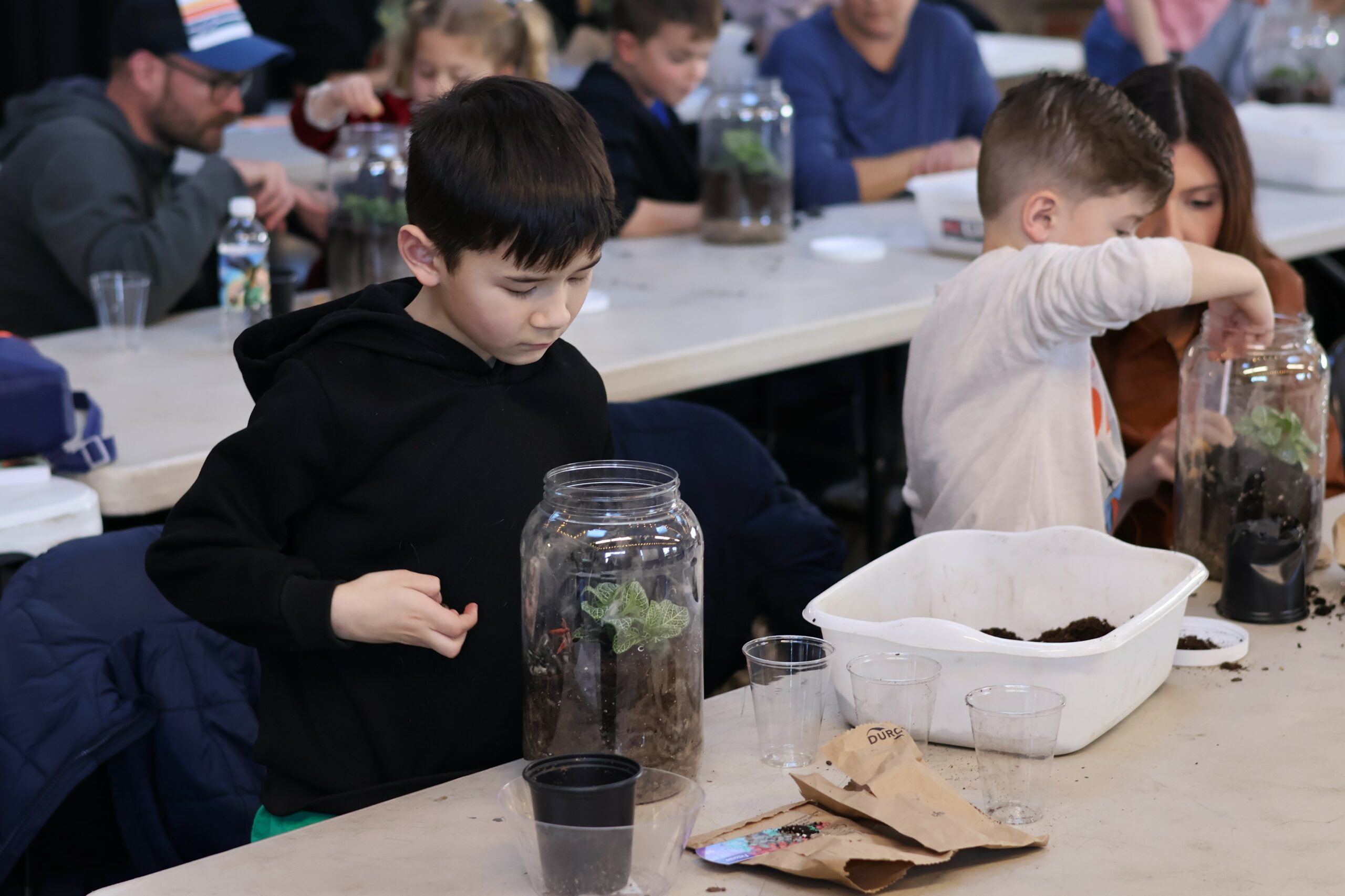
In Ecoponics’ terrarium workshop, students receive a kit that includes a jar, gravel, sphagnum moss, terrarium soil mix, a Fittonia plant, decorative sand and stones. These materials help participants understand how drainage, moisture retention, soil and plant selection work together.
Key learning outcomes often include:
- Understanding how plants survive in a closed or semi-closed container
- Learning how water moves through evaporation and condensation
- Connecting photosynthesis and respiration to everyday plant life
- Practising fine motor skills through layering, planting, and decorating
- Developing responsibility by caring for a living creation after the workshop
For schools, this makes terrarium workshops useful for science enrichment, environmental education, and hands-on STEM learning. For families and companies, the same activity becomes a calm bonding experience with a meaningful takeaway.
Why Terrarium Workshops Fit Singapore’s Sustainability Goals
Singapore’s sustainability challenges are practical and urgent. According to the National Environment Agency, Singapore generated about 6.66 million tonnes of solid waste in 2024, with 3.33 million tonnes recycled. Domestic recycling remained at 11%, while non-domestic recycling was 65%.
A terrarium workshop will not solve waste issues by itself, but it helps build the mindset needed for sustainable living. Participants learn to value materials, understand natural cycles, and appreciate how small systems depend on balance. When workshops use reusable jars, careful material portions, and plant-care education, they can also encourage more thoughtful consumption.
This aligns with the Singapore Green Plan’s Sustainable Living pillar, which aims to build a zero-waste nation supported by circular economy practices. In schools, this connection is even stronger because Singapore’s Eco Stewardship Programme has been implemented across MOE schools from Primary to Pre-University to nurture environmental stewards.
A Creative Activity for Schools, Families and Corporate Teams
For students: learning through making
For primary and secondary school students, terrarium workshops make science less intimidating. Instead of memorising terms like photosynthesis or condensation, students see those processes in action. Ecoponics lists its terrarium workshop as ideal for primary and secondary school students, with both virtual and face-to-face school workshop options available.
The activity also supports soft skills. Students must follow steps, ask questions, make design choices, and handle living materials gently. This builds patience and responsibility in a way that feels enjoyable rather than forced.
For families: meaningful screen-free bonding
Families often look for activities that appeal to both children and adults. Terrarium making works because everyone can participate at their own level. Younger children can decorate, older children can understand the science and parents can guide without taking over.
The finished terrarium also becomes a shared reminder of the experience. Unlike a one-time entertainment activity, it continues to live at home, encouraging follow-up conversations about plant care and sustainability.
For workplaces: calm team bonding with a takeaway
Corporate team-building activities sometimes feel too loud, competitive or physically demanding. Terrarium workshops offer a gentler alternative. Ecoponics describes its broader workshops as suitable for kids, teenagers and adults, including family occasions, formal events, corporate team building, private parties and birthday gatherings.
For companies, this kind of workshop can support wellness, creativity, and team connection without requiring participants to perform or compete. It is especially useful for teams that want an inclusive activity where introverts and extroverts can participate comfortably.
How Terrarium Making Encourages Eco-Conscious Habits
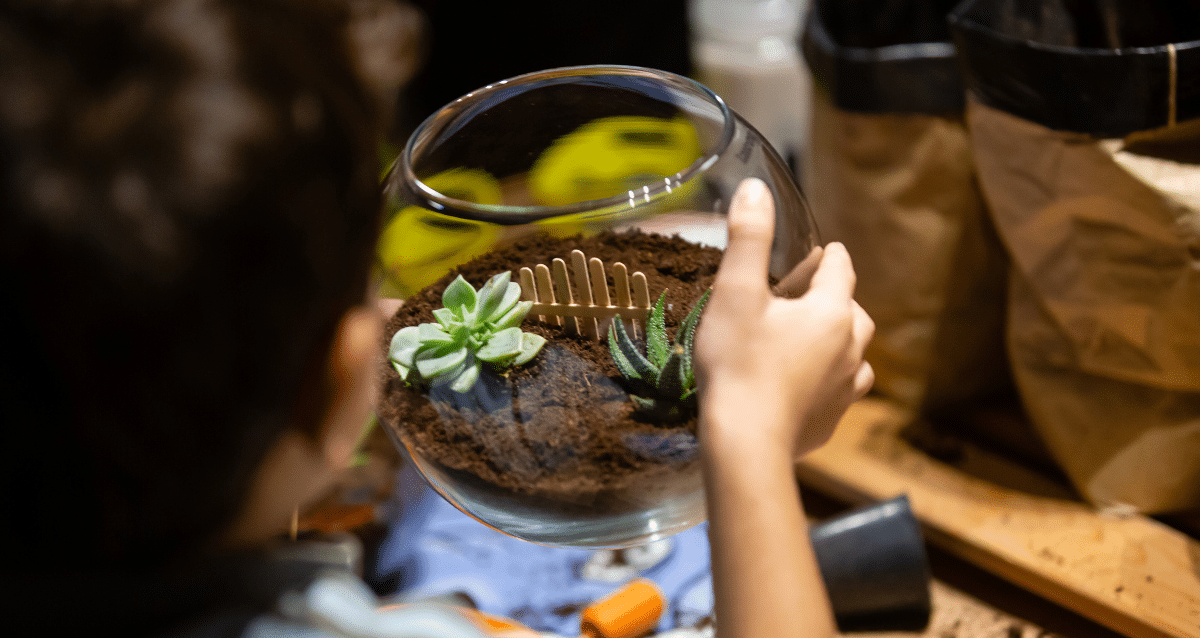
A terrarium teaches sustainability through experience rather than lecture. Participants see how balance matters: too much water can harm the plant, too little light affects growth and each layer plays a role in the system.
This helps people understand a bigger environmental idea: small actions affect larger systems. The same thinking applies to waste, water use, food choices and urban greenery.
Practical habits participants can take away include:
- Reusing glass containers creatively instead of discarding them
- Caring for plants as living systems, not disposable decorations
- Observing water use and avoiding overwatering
- Choosing low-maintenance greenery for indoor spaces
- Becoming more aware of how natural cycles support life
These lessons are simple, but they are memorable because they are linked to something the participant made with their own hands.
What Makes a Good Terrarium Workshop Experience?
A strong terrarium workshop should be structured enough for beginners but flexible enough for creativity. Participants need clear guidance on layering, plant placement, watering and aftercare. They also need enough freedom to personalise their design.
For schools, the best workshops connect each step to curriculum-friendly concepts such as plant needs, ecosystems, water cycles and sustainability. For companies, facilitators should focus on relaxation, bonding, and personal expression. For families, the session should be accessible, safe and enjoyable for different ages.
Ecoponics’ workshop includes MOE-certified instructors, hands-on learning and experience working with more than 100 schools in Singapore. These details matter because facilitation quality can determine whether participants simply make a jar or genuinely understand the science and sustainability behind it.
Practical Tips Before Joining a Terrarium Workshop
Before booking or attending a terrarium workshop, it helps to think about the purpose of the session. A school may want stronger science learning outcomes. A company may prioritise calm bonding. A family may want a relaxed weekend activity.
Consider the group size, age range, venue and whether participants will need virtual or in-person support. Ecoponics lists a minimum group size of 15 pax for its terrarium workshop, with virtual Zoom and face-to-face school workshop options.
Participants should also ask about aftercare instructions. A terrarium is low-maintenance, but it still needs the right light conditions and occasional monitoring. Clear aftercare guidance helps participants keep their terrarium healthy long after the workshop ends.
Conclusion: A Small Garden With Lasting Value
Terrarium workshops are popular because they meet several needs at once. They are creative without being difficult, calming without being passive, educational without feeling like a classroom lecture and sustainable without overwhelming participants with heavy environmental messages.
For Singapore, where urban living, sustainability education, and mental wellness are increasingly important, terrarium making offers a practical way to bring nature closer to everyday life. It gives students a living science model, families a meaningful bonding activity and workplaces a thoughtful team-building option.
The future of workshops is likely to move toward experiences that are purposeful, inclusive, and memorable. Terrarium workshops fit that direction well. They remind participants that even a small glass jar can hold a complete lesson about care, balance, creativity and our connection to the natural world.
FAQs
What is a terrarium workshop?
A terrarium workshop is a hands-on session where participants create a miniature plant ecosystem inside a glass container using soil, gravel, moss, plants and decorations.
Are terrarium workshops suitable for children?
Yes. Terrarium workshops are suitable for children because they combine creativity with simple science concepts such as plant growth, photosynthesis and the water cycle.
Can adults join a terrarium workshop?
Yes. Adults can enjoy terrarium workshops as a calming creative activity, team-building session or relaxing screen-free experience.
Do terrariums need a lot of maintenance?
No. Most terrariums are low-maintenance, but they still need suitable light, careful watering, and occasional observation to keep the plants healthy.
Why are terrarium workshops good for sustainability education?
They help participants understand natural cycles, plant care, resource use and ecosystem balance through direct hands-on experience.