Modern life gives people plenty of stimulation but not much satisfying focus. Many adults spend their days switching between tabs, messages, meetings, and short bursts of attention, then try to “relax” with more screen time at night. That is one reason hands-on wellness experiences are resonating now. McKinsey’s 2025 wellness research, based on more than 9,000 consumers across China, Germany, the UK, and the US, described wellness as a roughly $2 trillion market and noted that younger consumers increasingly see it as a daily, personalized practice, not an occasional purchase.
Terrarium workshops fit that shift unusually well. They combine three things people increasingly want from leisure time: a creative outlet, a calming sensory task, and a small but meaningful connection to nature. That mix matters because the research base behind arts participation and horticultural activity has become much stronger in the last two years. While there are still only limited studies on terrarium workshops specifically, the evidence from adjacent fields makes a persuasive case for why they work so well in practice.
The need for “mindful creativity” is real, not just trendy
The phrase mindful creativity can sound soft or vague, but the underlying idea is concrete: people feel better when they engage in activities that require attention, allow self-expression, and create a sense of progress. The World Health Organization states that artistic and leisure activities support holistic wellness and can help people process difficult emotions. That broad view is supported by a 2024 Frontiers in Public Health study that analyzed 7,182 adults in England and found that creating arts and crafts was linked with higher happiness, life satisfaction, and a stronger sense that life is worthwhile, even after accounting for age, deprivation, health, gender, and employment.
What makes terrarium workshops especially powerful is that they reduce two common barriers to creativity: idea overload and skill anxiety. A blank canvas can intimidate people. A terrarium does the opposite. It offers a clear frame, limited materials, and visible progress. Participants still make creative choices, but they do not have to invent everything from zero. That balance between structure and freedom is one reason these workshops feel restorative instead of stressful. This is an inference, but it lines up closely with what the crafting and horticultural-therapy literature shows about mastery, meaning, and engagement.
Why terrarium workshops feel so calming
They narrow attention in a healthy way
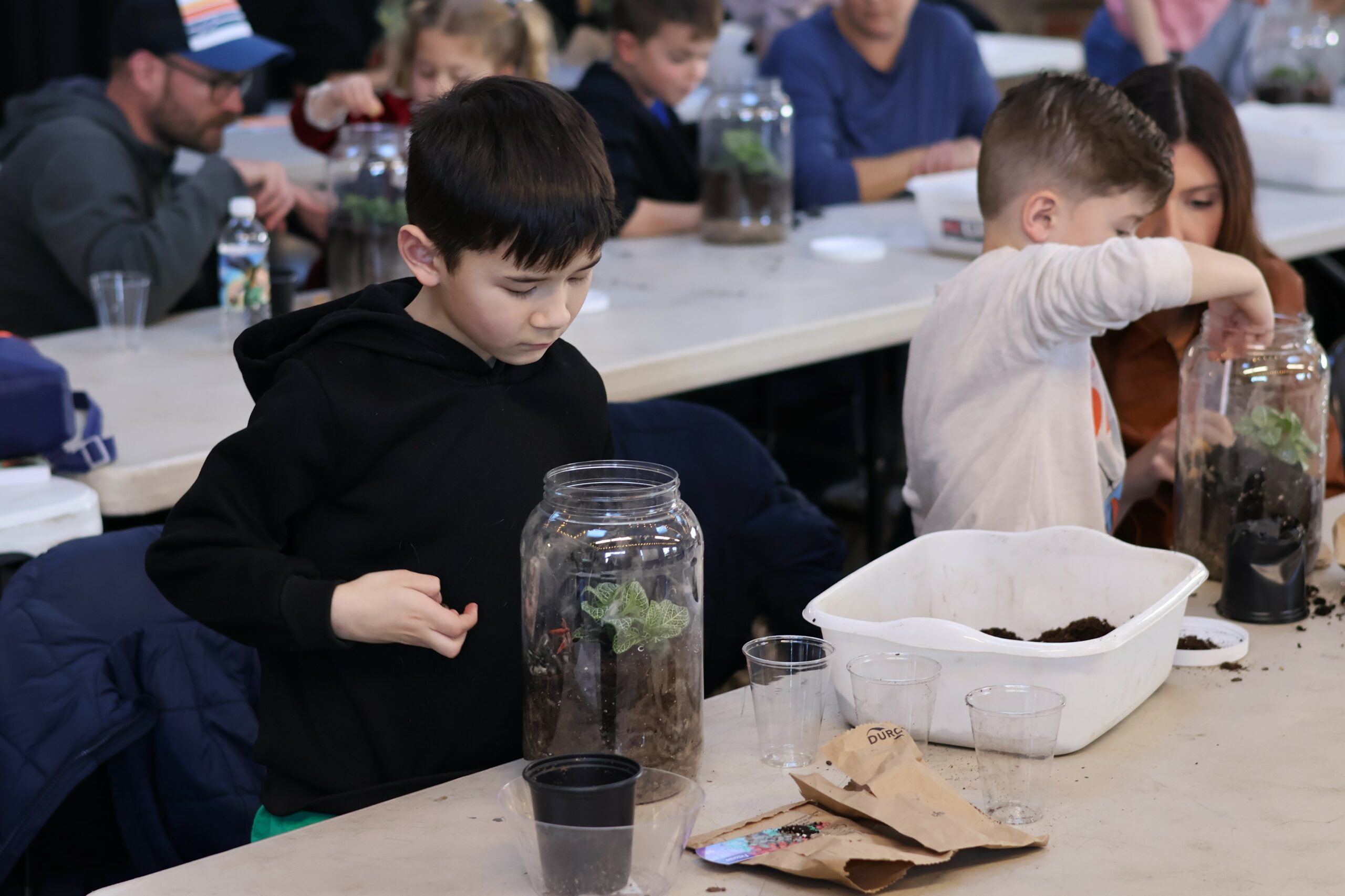
Mindfulness is often described as paying attention on purpose, in the present moment. Terrarium making naturally encourages that state. Participants sort gravel, layer soil, position moss, trim plants, and adjust tiny details. Those small decisions pull attention away from rumination and back toward the senses. A 2024 umbrella review and meta-analysis on gardening found an overall positive impact on mental well-being, quality of life, and health status, while a 2025 Frontiers review reported that gardening-based and social-therapeutic horticulture interventions are associated with reduced depression, anxiety, stress, mood disturbance, and loneliness.
They are creative without being chaotic
The 2024 arts-and-crafts study did not find that creativity solves everything, but it did find something important: craft engagement predicted a stronger sense that life is worthwhile, and the effect size on that measure was larger than the effect associated with being in employment in that model. It also predicted greater happiness and life satisfaction. That does not mean crafting is “better than work” in every sense; it means creative engagement carries measurable wellbeing value on its own. Terrarium workshops benefit from that same mechanism while adding the grounding effect of working with living materials.
They create a living reminder after the workshop ends
A painting or pottery piece can be satisfying, but a terrarium continues to exist as a miniature ecosystem on a desk, shelf, or reception counter. That matters because the workshop does not end when the session ends. The object becomes a cue for ongoing attention, care, and small moments of pause. Research on horticultural interventions suggests their benefits extend beyond mood into psychosocial outcomes such as improved quality of life, social interaction, and meaning. It is reasonable to infer that terrariums are memorable partly because they remain alive and ask for light-touch care rather than being completed and forgotten.

The workshop format matters as much as the plants
Terrarium workshops are not only about plants. They are also about how people gather. In a good session, everyone is working on the same activity at the same pace, but each person still produces something personal. That creates a low-pressure kind of social participation. People can chat if they want, stay quiet if they prefer, and still feel part of the room.
That social dimension is more important than it seems. A 2025 systematic review and meta-analysis in Frontiers in Psychiatry found that social and therapeutic horticulture can improve psychosocial outcomes by reducing loneliness and isolation and increasing social interaction, alongside improving quality of life and wellbeing. For organizations, this is a big advantage: terrarium workshops give teams a shared experience without forcing extroversion. For individuals, they offer connection without the awkwardness of networking-style events.
What recent research says about horticulture-based wellbeing
Recent studies have made the case more concrete. A 2025 Frontiers in Psychology study on therapeutic horticulture among university students found significant pre-post improvements in perceived stress, state anxiety, trait anxiety, general resilience, and academic resilience. In other words, plant-based structured activity was not just pleasant; it was associated with measurable psychological improvement.
Clinical research also points in the same direction. A 2024 randomized controlled trial involving 211 psychiatric inpatients found that adding horticultural therapy to standard care significantly reduced anxiety after four weeks compared with standard care alone. And a 2025 review of randomized controlled trials in depressive disorders reported significant improvements in depression, anxiety, cognition, social function, and quality of life, although the authors also noted that evidence quality ranged from very low to low and called for stronger future trials. That balance is important: the findings are promising, but serious claims should still be made carefully.
There is even practical guidance emerging on program design. A 2025 meta-analysis found that horticultural-therapy interventions for depressive symptoms performed best when sessions were more than 60 minutes, delivered less than three times per week, and run for 5 to 8 weeks. That does not mean a single terrarium workshop is ineffective. It suggests that a one-off session works best as an entry point, while a short recurring series may produce stronger benefits for wellbeing programs, schools, libraries, or employee experience initiatives.
Why terrarium workshops are gaining momentum now
This is not happening in a vacuum. Consumer behavior is moving toward wellness experiences that feel personal, tactile, and skill-building. McKinsey’s 2025 research shows that younger consumers are broadening the meaning of wellness, while a 2024 Axiom survey found that new and novice gardeners were leaning further into the category: 48.3% planned to spend more money on gardening in 2024, 52.1% planned to spend more time on it, and 69.7% said they would plant more and expand their gardens. Terrarium workshops sit directly at that intersection of wellness, décor, and beginner-friendly plant care.
There is also a wider policy and economic backdrop. The UK Department for Culture, Media and Sport reported in its 2024–25 annual report that general engagement with culture and heritage delivers £8 billion per year in health and wellbeing benefits to wider society. Terrarium workshops are obviously smaller than national cultural infrastructure, but they belong to the same broader story: creative participation is increasingly being treated as something with real social value, not just leisure value.
Where terrarium workshops create the most value
Terrarium workshops work especially well in settings where people need calm, connection, and a sense of accomplishment.
- Corporate teams: better than passive wellness talks because people actually make something together, which supports focus, conversation, and shared memory. The growing employer interest in wellbeing makes this especially relevant now.
- Retail and hospitality brands: workshops turn plant products into experiences, which increases emotional engagement and gives customers a reason to spend longer with the brand. The gardening trend among novice participants supports this commercial angle.
- Schools, libraries, and community spaces: the activity is accessible, visually appealing, and easy to scale for mixed ages and skill levels. Research on arts and horticulture suggests it can support wellbeing without requiring advanced creative confidence.
- Wellbeing programs: not as a replacement for therapy, but as a supportive, low-barrier intervention that combines creativity, nature contact, and gentle social participation.
How to design a terrarium workshop that actually feels mindful
Many workshops fail because they become rushed, over-instructed, or overly decorative. If the goal is mindful creativity, the design matters.
- Keep sessions long enough for immersion. Research on horticultural interventions suggests 60+ minutes is a useful threshold for stronger effects.
- Limit choices without making everything identical. Too many materials create decision fatigue; too few make the session feel mechanical.
- Build in a slow opening. A short introduction on texture, layering, and plant placement helps participants arrive mentally before they start assembling. This is an evidence-based design inference from mindfulness and horticultural-engagement findings.
- Use beginner-proof plants and clear care instructions. A calming workshop loses value if participants take home something they immediately kill. The rise of novice gardening makes ease of care especially important.
- Offer an optional follow-up. A two- to six-week check-in, photo share, or repeat session can turn a pleasant event into a habit-forming wellbeing activity. That idea aligns with the evidence favoring short repeated programs over one isolated intervention.
Conclusion
Terrarium workshops are more than a craft trend with pretty glass jars. They work because they bring together several evidence-backed ingredients at once: focused attention, tactile making, nature contact, modest social connection, and a visible sense of progress. Recent research in arts participation shows that creative activity is linked to stronger happiness, life satisfaction, and meaning, while newer horticultural studies show improvements in stress, anxiety, resilience, and psychosocial wellbeing.
The future outlook is strong. As wellness becomes more daily, personalized, and experience-led, activities that are calm, skill-light, and emotionally satisfying will keep gaining traction. Terrarium workshops meet that demand unusually well. They do not promise transformation overnight, and they should not be oversold as therapy. But as a practical way to help people slow down, make something beautiful, and reconnect with both nature and attention, they are one of the smartest formats in the mindful-creativity space right now.
FAQs
What is a terrarium workshop?
A terrarium workshop is a hands-on session where people create small plant displays inside glass containers using soil, stones, moss, and decorative elements.
Why are terrarium workshops considered mindful?
They encourage slow, focused attention through simple, sensory tasks like layering, planting, and arranging natural materials.
How do terrarium workshops support creativity?
They give participants freedom to design something personal without the pressure of starting from a completely blank canvas.
Are terrarium workshops good for stress relief?
Yes, they can help reduce stress by combining calming plant interaction with a quiet, absorbing creative activity.
Do you need gardening experience to join a terrarium workshop?
No, most workshops are beginner-friendly and designed for people with little or no plant-care experience.
Why do terrariums feel different from other craft activities?
Unlike many crafts, terrariums are living creations that continue to grow and stay part of your daily environment.
Can terrarium workshops work for team-building events?
Yes, they are great for team-building because they create shared experiences in a relaxed and low-pressure setting.
How long should a terrarium workshop last?
A well-paced workshop usually works best at around 60 minutes or longer so participants can settle in and enjoy the process.