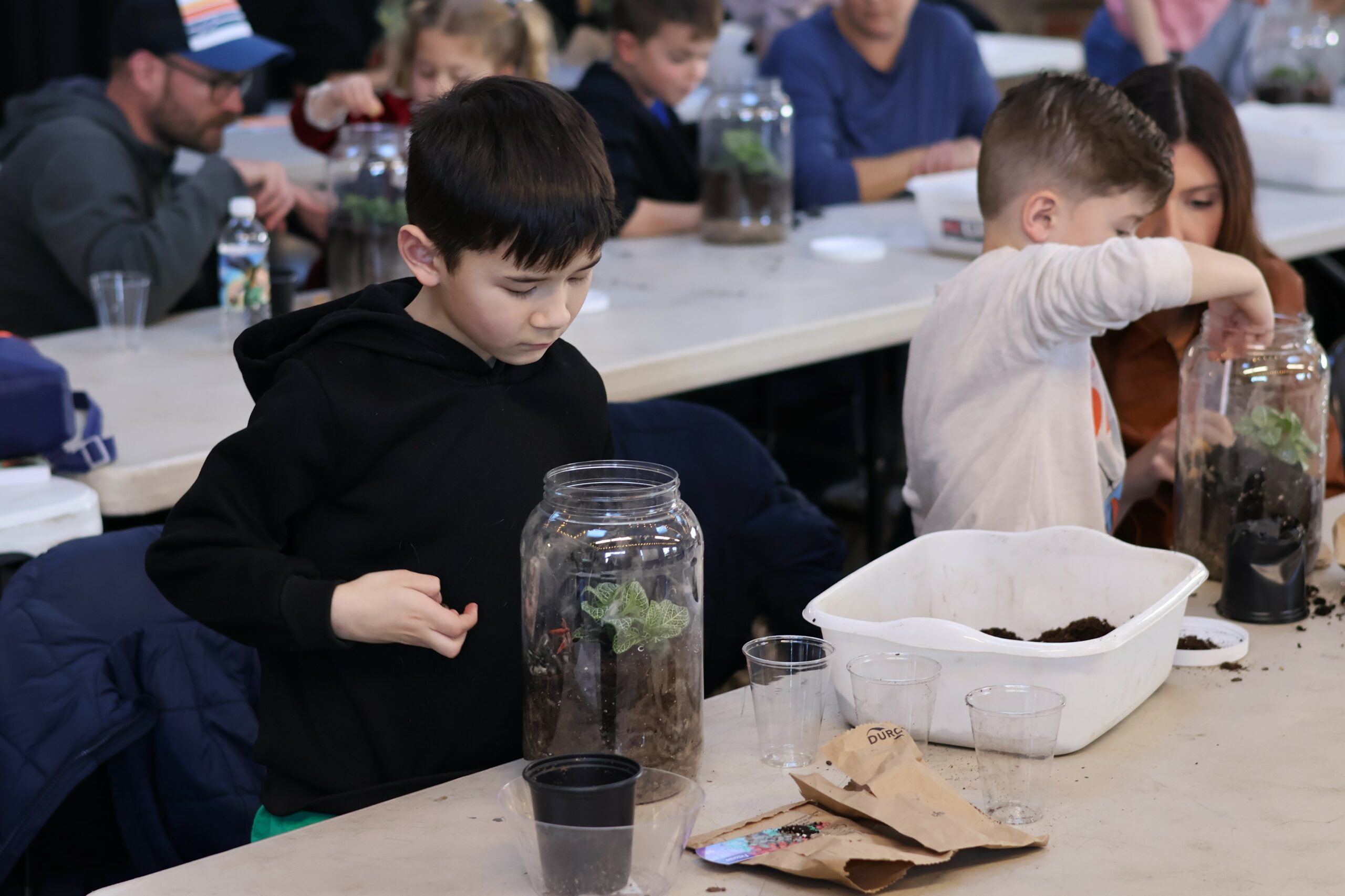
A terrarium looks simple from the outside: a glass container, a few small plants, a little moisture, and a decorative layer or two. But biologically, it is a tight, high-humidity growing system with very little room for error. In a standard pot, a weak soil mix can sometimes be rescued by repotting, flushing salts, or letting the container dry out. In a terrarium, especially a closed one, the substrate sits in a small root zone where water recirculates, humidity stays high, and oxygen can disappear fast. That is why soil quality is not a cosmetic choice. It is the foundation that determines whether a terrarium becomes a stable miniature ecosystem or a slow-motion root-rot problem.
It also helps to be precise about terms. In terrarium culture, “soil” usually means a potting medium or substrate, not outdoor garden soil. Oklahoma State Extension explicitly advises against using garden soil because it is too heavy, provides poor aeration and capillary movement, and may contain weed seeds, insect eggs, and disease-causing organisms. In other words, the wrong “soil” can fail both physically and biologically before the plants have much chance to establish.
What “good soil” means in a terrarium
In a terrarium, good soil is really a balance of four things: air space, water-holding capacity, pH, and cleanliness. Missouri Extension recommends a layered build that separates drainage material, charcoal, sphagnum moss, and the growing medium, while Iowa State recommends a light, well-drained potting soil rather than a dense mix. Mississippi State adds that only clean, washed gravel and sterile, soilless potting mix should be used in a closed system. These recommendations all point to the same idea: the substrate has to hold enough moisture for a humid environment without turning into a compacted, oxygen-starved mass.
That distinction matters because terrarium plants are usually selected for slow growth, high humidity tolerance, and relatively low to medium light. Those plants are adapted to steady moisture, not perpetual saturation. A substrate that stays soggy can create a very different root environment from the one the foliage seems to suggest.
Why root-zone structure matters more than most people think
Aeration is not optional
Container horticulture has long measured substrate quality by physical properties such as total porosity, air-filled porosity, and water-holding capacity. UC Agriculture and Natural Resources gives a practical benchmark at container capacity of at least 50% total porosity, at least 10% air-filled porosity, and at least 40% water-holding capacity. North Carolina State’s older but still widely used container-media guidance similarly notes that air space below 20% is unsuitable for most container plants, while 20% to 30% drainable pore space is generally preferred for many nursery crops. Terrariums are smaller and more specialized than nursery pots, but the physics are the same: roots need both water and oxygen.
Oklahoma State puts the consequence plainly: in an overwatered terrarium, roots suffocate in oxygen-depleted potting medium, rot, and eventually die. A 2025 review in Frontiers in Plant Science reaches the same conclusion from a broader plant-physiology perspective, finding that waterlogging disrupts nutrient absorption and can trigger deficiencies in nutrients such as potassium and calcium. So when a terrarium mix is too fine, too dense, or too wet, the first problem is often not “too much water” by itself. It is lack of oxygen in the root zone.
Water-holding capacity has to be balanced, not maximized
A common beginner mistake is assuming that more moisture retention is always better in a terrarium because the environment is humid. In reality, a good terrarium substrate needs to be water-retentive and open enough to breathe. Iowa State notes that many closed terrariums need watering only every three to six months, depending on soil type, plant species, light, and other factors. Mississippi State goes even further, noting that once a closed terrarium reaches equilibrium, it can go for weeks to years without additional watering. That means a poorly designed mix can stay too wet for a very long time.
A useful real-world way to think about this is simple: in a closed terrarium, the substrate is not just holding water for the plant. It is setting the moisture rhythm of the entire system. If the mix is too coarse, the terrarium dries unevenly and becomes hard to stabilize. If it is too fine, the water cycle keeps recycling excess moisture back into an already wet root zone. In a glass container with limited evaporation and little leaching, substrate mistakes last longer than they do in ordinary houseplant care.
pH decides whether nutrients are usable
A terrarium can contain nutrients and still fail to feed the plant properly. The reason is often pH. Research published in Frontiers in Plant Science states that substrate pH directly affects nutrient availability in the rhizosphere and nutrient uptake by plants, with macronutrients such as nitrogen, potassium, calcium, magnesium, and sulfur being highly available around pH 6.0 to 6.5, while micronutrients become less available in alkaline media above pH 7.0. Purdue’s container-substrate guidance recommends a similar working range of roughly pH 5.4 to 6.6 for many soilless mixes. Cornell’s container-media notes also warn that high pH reduces the solubility of phosphorus, iron, manganese, zinc, and boron, which can lead to deficiency symptoms even when nutrients are present in the medium.
For terrarium growers, this matters because many common closed-terrarium plants, such as fittonias, peperomias, and small ferns, are grown for foliage quality rather than flowers or fruit. If pH drifts too high, the first signs may be pale new growth, weak color, or slow recovery after pruning. People often treat that as a fertilizer problem when it is really a chemistry problem. In a closed setup, adding more fertilizer to solve a pH-driven deficiency can make the substrate worse, not better.
Clean, low-risk substrate matters in humid glass systems
Terrariums reward cleanliness because they reduce natural escape routes for excess moisture, odor, and contaminants. Missouri Extension notes that charcoal is especially important in closed terrariums because chemicals cannot naturally escape. Mississippi State recommends indoor-grade, heat-treated bark and warns against outdoor landscape bark because it may harbor pathogens. Oklahoma State warns against garden soil for similar reasons, including disease organisms and insect eggs. In a humid, enclosed container, that biological risk is not theoretical. It is amplified.
This is one area where recent horticulture research is especially relevant. A 2025 review in Plants, People, Planet found that some peat alternatives can carry elevated plant-pathogen risk, including the possibility of introducing novel pathogens, and recommended clearer constituent sourcing, sanitization standards, and routine pathogen testing. That does not mean peat-free substrates are bad. It means quality control matters. For terrarium hobbyists, the practical takeaway is straightforward: buy mixes and ingredients intended for indoor or horticultural use, prefer sanitized or heat-treated components, and do not assume that “natural” automatically means “safe in a sealed terrarium.”
Soil quality influences maintenance, appearance, and lifespan
Terrariums are often marketed as low-maintenance, but low-maintenance does not mean self-correcting. Mississippi State says closed terrariums typically have a display life of one to two years, while Oklahoma State says the planting usually stays visually in proportion to the container for about one year before pruning or replacement becomes necessary. Soil quality plays a major role in how graceful that aging process feels. A balanced substrate slows crowding, reduces rot risk, and helps the system stay visually stable longer. A poor one accelerates yellowing, legginess, algae buildup, and emergency maintenance.
Fertilizer is part of this conversation too. Iowa State advises avoiding fertilizer because it encourages abundant growth and earlier crowding, though it allows quarter-strength feeding if deficiency symptoms appear. Mississippi State is even firmer, saying there is no need to add fertilizer to a closed system. In practical terms, high soil quality reduces the urge to “fix” terrariums with extra feeding. A stable substrate often solves more problems than fertilizer does.

What is changing in 2024–2026 substrate trends
Peat-free media is moving from niche to mainstream
One of the biggest recent shifts in horticulture is the move toward peat-reduced and peat-free growing media. A 2025 historical review in Frontiers in Horticulture explains why peat dominated for so long: it offered an unusual combination of nutrient control, pH buffering, water retention, structural stability, and relatively low pathogen pressure. That same review also notes that environmental concerns have kept pressure on the industry to substitute peat with alternatives.
The sustainability case is strong. UNEP states that peatlands cover only about 3% of global land area yet store twice as much carbon as all the world’s forests, and that drained and burned peatlands account for greenhouse-gas releases equivalent to about 10% of annual fossil-fuel emissions. For anyone mixing terrarium substrate at home, that is why peat-free products are getting more attention from brands, retailers, and growers.
But newer mixes need smarter handling
Recent industry work shows that peat-free success depends on management, not just ingredient substitution. At an RHS peat-free workshop in March 2024, speakers emphasized that ingredients in peat-free mixes interact with one another, overwatering can increase nutrient leaching, and growers often need to adjust irrigation and feeding compared with peat-based media. The RHS also stated it is aiming to be 100% peat-free in all operations by January 1, 2026, and its peat-free fellowship is running randomized, replicated trials across eight nursery partners. The RHS trial guide adds that peat-free mixes can look dry on top while remaining moist lower down and that plants may root later in them.
For terrarium growers, that trend matters because many new retail “eco” mixes behave differently from older peat-heavy products. A sustainable label does not tell you enough. What matters is how the substrate performs in a small, enclosed, humid system. The best terrarium mix in 2026 is not simply the greenest one on the shelf. It is the one whose structure, pH behavior, and sanitation fit the plants you are growing.
A practical checklist for evaluating terrarium soil quality
Before planting, a high-quality terrarium substrate should usually pass a few basic tests:
- It is sold as a potting mix or soilless substrate, not outdoor garden soil.
- It feels light and open rather than dense, sticky, or muddy when moistened.
- It is built to balance water retention with air space, because roots need oxygen as much as moisture.
- Its pH is roughly in the mildly acidic range used for most container crops, around 5.5 to 6.5.
- Its ingredients are clean, horticultural-grade, and ideally sanitized or heat-treated.
- It is not heavily fertilized for fast growth, especially for a closed terrarium.
A sensible starting point for many tropical closed terrariums is a fine-textured but airy indoor potting mix, used with clean drainage material and charcoal, then adjusted based on the plants. For more arid or open terrariums, the same principle holds but with more drainage and less water retention. That recommendation is a synthesis of container-substrate guidance and terrarium extension advice rather than a universal recipe, because the best mix still depends on the species and the degree of enclosure.
Conclusion
Soil quality matters in terrarium plant growth because the substrate is doing far more than anchoring roots. It regulates oxygen, stores and releases water, controls nutrient availability through pH, and determines how much biological risk enters a sealed environment. In a terrarium, weak substrate design is rarely a small issue. It usually becomes the main issue.
The next few years will make substrate quality even more important, not less. As growers and consumers shift toward peat-free and lower-impact media, successful terrarium planting will depend on understanding how ingredients behave, not just which ingredients sound sustainable. The future of better terrariums is not about adding more layers or more accessories. It is about using smarter, cleaner, better-balanced growing media that match the biology of enclosed plant systems. That is where healthy roots, longer-lasting displays, and better plant performance all begin.
FAQs
What is the best soil for a terrarium?
A light, well-draining potting mix or soilless substrate works best for most terrariums.
Why is soil quality important in a terrarium?
It affects root health, moisture balance, nutrient uptake, and overall plant survival.
Can I use garden soil in a terrarium?
No, garden soil is usually too dense and may contain pests, weed seeds, or pathogens.
How does poor soil affect terrarium plants?
It can cause root rot, slow growth, yellow leaves, mold, and poor plant health.
Does terrarium soil need good drainage?
Yes, good drainage helps prevent waterlogging and keeps roots from suffocating.
What role does pH play in terrarium soil?
pH affects how well plants absorb nutrients from the substrate.