Urban life is getting denser, faster, and more screen-heavy. The United Nations said nearly 58% of the world’s population was living in urban areas in 2024, which helps explain why compact, indoor forms of nature are becoming more attractive to households, schools, and offices alike. At the same time the indoor plants market is still growing: Mordor Intelligence estimates it will rise from USD 13.12 billion in 2025 to USD 13.61 billion in 2026, with Asia-Pacific the fastest-growing region and online sales, wellness use cases, and smart plant formats all expanding. In that context a terrarium workshop is not just a craft class. It is a compact lesson in ecology, design and well-being, wrapped in an object people actually want to keep on their desk or shelf.
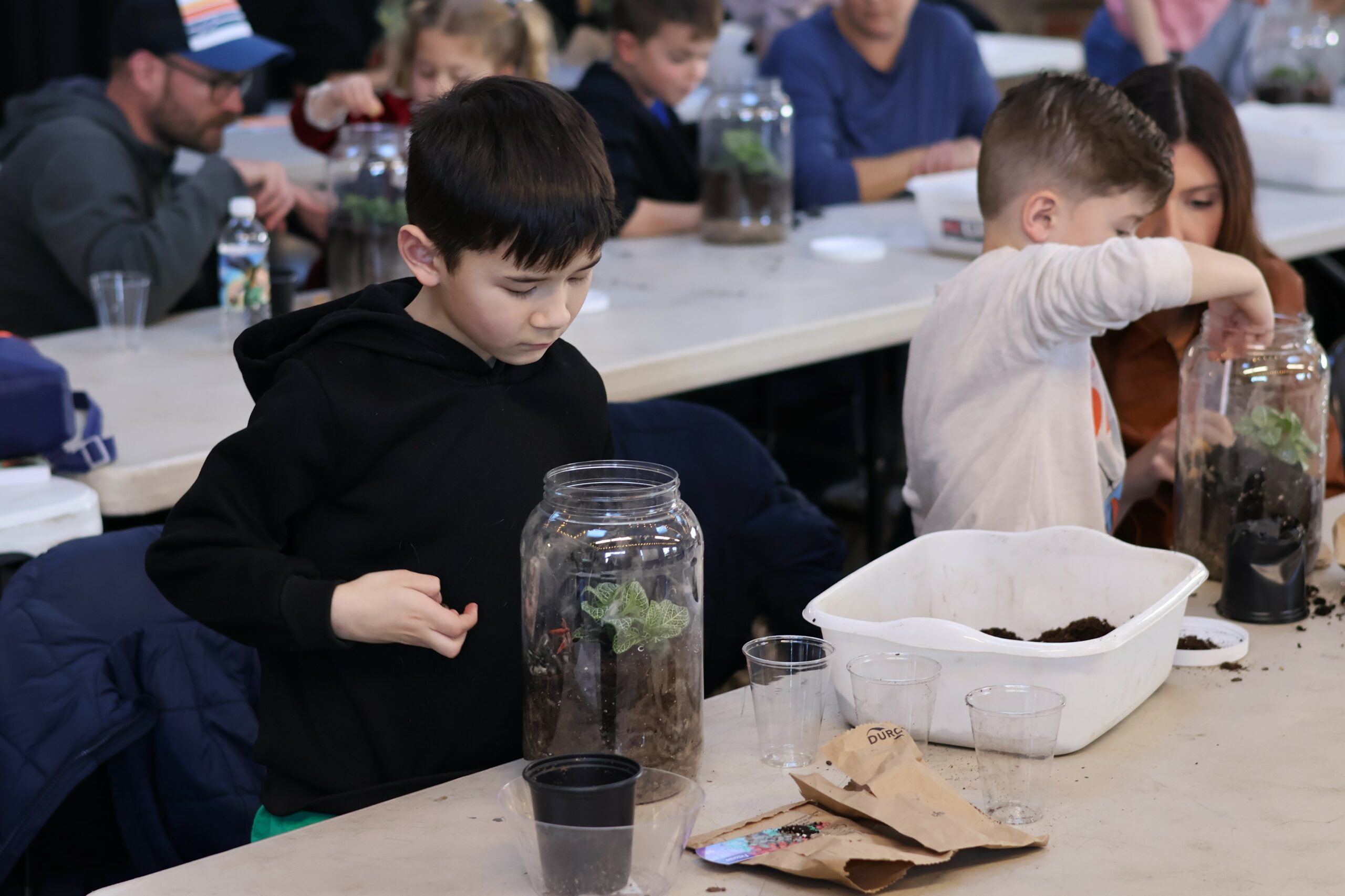
What makes the Ecoponics Terrarium Workshop especially interesting is that it turns this broad indoor-greening trend into a hands-on experience. Ecoponics positions the workshop as a 1 to 1.5 hour session that teaches participants about photosynthesis, respiration, and the water cycle, while guiding them through the process of building a terrarium themselves. The standard kit includes a jar, gravel, sphagnum moss, terrarium soil mix, a Fittonia plant, and decorative sand and stones. In other words, it is structured less like a casual arts-and-crafts activity and more like an accessible micro-lab in environmental science.
Why terrarium workshops fit the moment
The appeal of terrariums is partly aesthetic, but the real reason they matter in 2026 is that they sit at the intersection of three trends: compact living, biophilic design, and experience-led learning. The WELL Building Standard explicitly includes “indoor biophilia” as a design feature, with potted plants or planted beds covering at least 1% of floor area per floor, or plant walls covering 2% of floor area. That tells you something important: greenery is no longer treated only as decoration. In modern buildings, it is increasingly framed as part of emotional and psychological well-being.
The market data points in the same direction. Mordor Intelligence estimates that home decoration accounted for 54.05% of indoor-plant market demand in 2025, while air-purification and wellness installations were growing at 7.92% CAGR through 2031. It also projects online platforms to grow at 10.05% CAGR and smart potted/IoT-enabled formats at 11.20% CAGR, which suggests consumers increasingly want greenery that fits modern routines rather than demanding traditional gardening space. A terrarium workshop fits that shift neatly: low footprint, high visual payoff, and a built-in story of sustainability and care.
Even terrarium-specific market forecasts reflect this momentum, though industry estimates vary. One 2025 market projection put the global terrarium market at USD 1.65 billion in 2025 and forecast USD 2.69 billion by 2031, implying that miniature ecosystems are moving from niche hobby to mainstream lifestyle category. That does not prove every workshop will succeed, but it does show the category is commercially relevant.
What actually happens inside the Ecoponics Terrarium Workshop
Ecoponics offers the workshop in several formats, including sessions for children, team building, and learning about greenery, and notes that group classes start at a minimum of 5 participants. It also offers different terrarium styles, including classic terrariums, assorted terrariums, and a soil-free air plant option. That range matters because it lets the workshop serve different goals: science enrichment for students, light collaboration for teams, or a calming creative activity for adults who want a tactile break from digital work.
From a learning perspective, the workshop is cleverly designed. The materials are not random. Gravel helps with drainage, sphagnum moss acts as a separation layer, the soil mix supports root health, and the glass enclosure makes moisture behavior visible. The educational strength of a terrarium is that abstract ideas become observable. Participants do not just hear about the water cycle; they can later see condensation form on the glass and return to the substrate. They do not just memorize that plants respire and photosynthesize; they build a system where plant survival depends on those processes staying in balance. Ecoponics makes that science explicit in its program outline rather than hiding it behind décor.
That is why the workshop has more depth than a typical DIY session. A good terrarium teaches constraints. Too much water causes rot. Too little light weakens growth. The wrong plant mix creates competition or maintenance problems. In a small glass vessel, cause and effect become easier to notice, which is exactly why terrariums work so well as introductory ecology tools.
The hidden engineering inside a terrarium
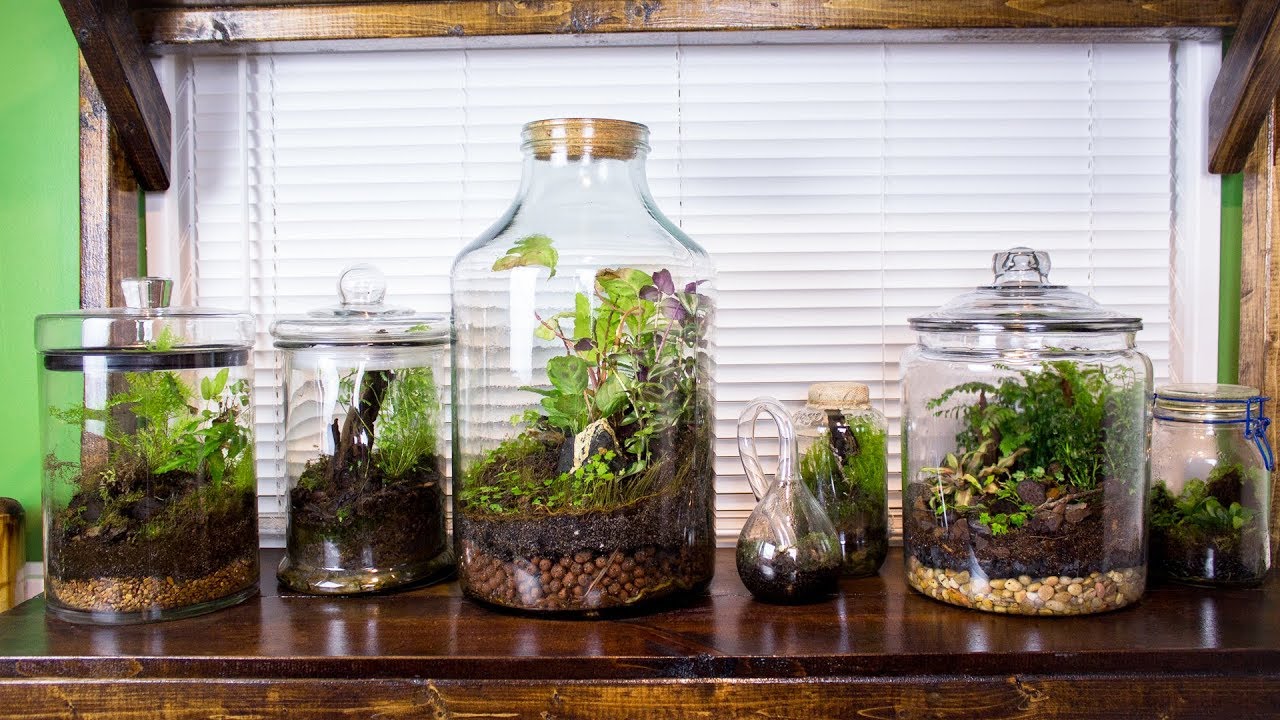
A terrarium may look like a decorative object, but it behaves like a miniature engineered environment. The base layer manages water movement. The planting layer stores nutrients and anchors roots. The enclosure changes evaporation and humidity. The plant selection determines how forgiving the system will be over time. In that sense, building a terrarium is a simplified exercise in environmental control you are balancing water, air, light, substrate and living organisms inside a limited container.
That is also why Ecoponics’ curriculum focus is smart. By centering photosynthesis, respiration and the water cycle, the workshop introduces participants to systems thinking without making the session feel academic. A terrarium becomes a small model of larger sustainability questions: How do living systems recycle moisture? What happens when inputs are excessive? How much intervention is actually necessary when a system is designed well?
For schools, this matters because students can physically manipulate variables rather than passively consume information. For adults, it matters because the object they build continues teaching after the workshop ends. A terrarium on a desk becomes an ongoing reminder that stable systems depend on balance not constant force.
Why the experience feels calming not childish
There is now better evidence that plant-based activities are not just pleasant; they can be measurably restorative. A 2024 study abstract indexed on PubMed reported that even 10 minutes of watering houseplants reduced mental and physical stress levels in older adults. A 2025 systematic review and meta-analysis in Frontiers in Psychiatry went further, finding large significant effects for depression and moderate significant effects for anxiety in favor of social and therapeutic horticulture interventions across comparator studies.
That does not mean every terrarium class is therapy, and it should not be marketed as a substitute for clinical care. But it does help explain why participants often describe the experience as grounding. Plant work is slow, sensory and consequence-based. Your hands are occupied your attention narrows, and the feedback is immediate. Research on children published in 2024 also suggested that horticultural activities using real, vibrant plants or natural materials can produce stronger stress-relieving effects than less attractive alternatives, which is relevant when workshops are designed for younger learners.
This is where terrarium workshops outperform many generic creative experiences. The outcome is beautiful, but the process also contains rhythm: layering, planting, arranging, adjusting and pausing. It is structured enough to keep people focused, yet open-ended enough to feel personal.
What participants really take away
A strong terrarium workshop gives participants more than a jar of plants. It gives them a set of useful ideas they can apply elsewhere:
- A working model of ecology: participants see how moisture, light, plant choice and substrate interact inside a small system.
- A practical lesson in biophilic design: the finished piece is a compact way to bring living nature into desks, classrooms, and meeting rooms.
- Creative confidence without a high skill barrier: terrariums reward composition and restraint, but beginners can still leave with something attractive. Ecoponics’ guided format is built for that.
- A more memorable science lesson: when people assemble the system themselves, the concepts are easier to retain because they are tied to a visible outcome. Ecoponics explicitly frames the workshop around core plant science topics.
Why this workshop format works for schools, teams and modern brands
For schools the workshop is valuable because it connects environmental science to a concrete object students can take home. Ecoponics explicitly lists primary and secondary school students as an ideal audience, which makes sense: terrariums are small, safe to transport, and rich in teachable moments.
For teams, the benefit is different. Ecoponics positions its terrarium sessions as a relaxing and therapeutic corporate team bonding event, and the format supports that well. People can talk while they work, compare design choices and collaborate without the pressure of a competitive exercise. In an era when offices are increasingly influenced by biophilic and wellness thinking, that makes terrarium workshops a stronger fit than many one-off entertainment activities.
For experience-led businesses and event organizers, there is also a branding angle. Workshops like this are easy to photograph, easy to personalize and aligned with 2025–2026 interest in indoor plants, sustainability and compact lifestyle products. The Royal Horticultural Society’s 2025 and 2026 trend coverage points to continued momentum around houseplants, indoor gardens, composting, and adventurous container planting, reinforcing the idea that indoor growing remains culturally visible rather than fading into a pandemic era fad.
How to get more value from a terrarium workshop
If the goal is not just to attend but to learn something useful a few habits make a big difference:
- Choose the plant style that matches your maintenance tolerance a terrarium is only low effort” when the plant type suits the environment. Ecoponics offers multiple formats for that reason.
- Pay attention to layering, not just decoration. The invisible structure usually matters more than the stones on top.
- After the workshop observe before you intervene. Condensation, leaf softness and soil moisture will tell you more than frequent watering ever will.
- Treat the jar as a living system not a static ornament. The best terrariums are edited over time.
Conclusion
The Ecoponics Terrarium Workshop works because it answers a very modern need with an unusually elegant format. It gives urban people a way to handle living materials without needing a garden. It gives schools a more memorable way to teach ecology. It gives teams a calmer, more meaningful shared activity than many standard bonding sessions. And it gives participants something rare: a physical object that keeps extending the lesson after the workshop is over.
As indoor plant demand keeps growing, biophilic design becomes more embedded in workplaces and experience led learning continues to outperform passive instruction, terrarium workshops are likely to become even more relevant. The future of these workshops is not just in craft retail. It is in education, workplace wellness and sustainable lifestyle design. A terrarium may be small but as a teaching tool and a cultural signal it is much bigger than it looks.
FAQs
What is the Ecoponics Terrarium Workshop?
A hands on workshop where participants build a mini garden in glass while learning basic plant science.
Who can join the terrarium workshop?
It is suitable for children, adults, school groups and corporate teams.
How long does the workshop usually take?
Most sessions take around 1 to 1.5 hours.
What do participants learn in this workshop?
They learn about photosynthesis, respiration, the water cycle and terrarium care.
What materials are included in the workshop?
The kit usually includes a jar, gravel, moss, soil mix, plants and decorative items.
Why are terrariums popular today?
They fit modern indoor spaces, support wellness trends, and add natural beauty with little space.
Is the workshop only about decoration?
No, it also teaches ecology, design balance and how small plant systems work.