Singapore is one of the clearest places in the world to understand why hydroponics matters. The country imports more than 90% of its food, has less than 1% of land set aside for agriculture, and still wants local farming to play a meaningful role in food resilience. In 2024, local vegetable farms supplied only about 3% of Singapore’s total vegetable consumption, yet their productivity still improved to 231.4 tonnes per hectare per year. That gap between limited land and rising productivity is exactly where hydroponics becomes more than a hobby topic.
That is what makes the Ecoponics hydroponics workshop in Singapore interesting. It is not positioned as a casual craft session with a few seedlings on a table. Ecoponics presents it as a science and environmental enrichment programme focused on food security, urban farming, and hands-on understanding of hydroponics. On its workshop page, the company describes a beginner-friendly session that typically runs 1 to 1.5 hours, works with a minimum group size of five, assigns trainers in small ratios, and uses a demo “growMe” system with 15 growing pods for each class.
Why this workshop matters more in 2026 than it did a few years ago
The bigger story around hydroponics in Singapore has changed. For several years, urban farming conversations were framed around the “30 by 30” goal. But by late 2025, Singapore formally shifted to a broader “Singapore Food Story 2” strategy. The government kept local production as an important pillar, while acknowledging that land constraints, energy costs, manpower costs, and financing pressures make resilience a more practical goal than chasing every food category locally. The updated targets now aim for local farms to supply 20% of domestic fibre consumption and 30% of protein consumption by 2035.
That policy shift actually makes a workshop like Ecoponics more relevant, not less. A modern hydroponics workshop is not mainly about convincing people that Singapore can grow everything itself. It is about helping students, parents, teachers, and even corporate teams understand what local production can realistically do well: produce certain vegetables efficiently, make use of small spaces, shorten supply chains, and build food literacy in a country where resilience depends on both imports and smart local systems.
What the Ecoponics workshop experience actually feels like
Ecoponics’ own description makes it clear that the session is designed to bridge theory and application. The workshop introduces urban farming through hydroponics, then asks participants to relate textbook concepts to a real setup. The learning goals listed on the page are practical and Singapore-specific: understanding food security, the benefits of urban farming, how hydroponics works, and how vegetables can be grown in such a system. That gives the session a stronger STEM identity than a typical gardening demo.
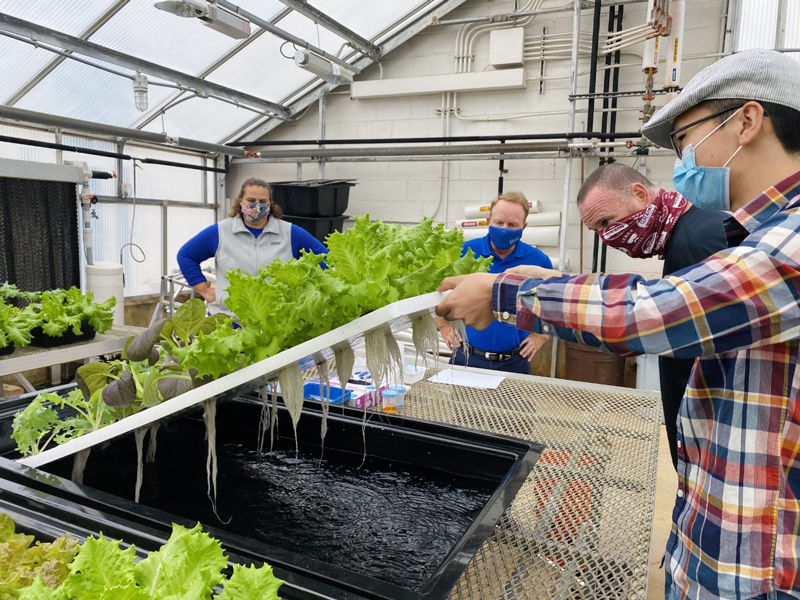
In practical terms, the workshop appears to be structured around clarity and accessibility. Ecoponics says no prior knowledge is required. Participants work with the basics of the system, including water, nutrient solutions A and B, sponges, and seeds. The company also notes that sessions are usually run in a classroom-style environment with a visualizer, power point, and water point, which suggests the programme is built for schools and organised groups rather than informal drop-ins. That matters because it tells you what kind of experience to expect: guided, instructional, and repeatable.
There is also a useful signal in the logistics. The listed venue is at Mapex, near Marymount MRT, and the programme is framed as suitable for children, team building, learning about greenery, and working together as a team. In other words, Ecoponics is selling hydroponics not just as agriculture, but as a structured experience format that can fit education, enrichment, and small-group engagement.
What participants are really learning beneath the surface
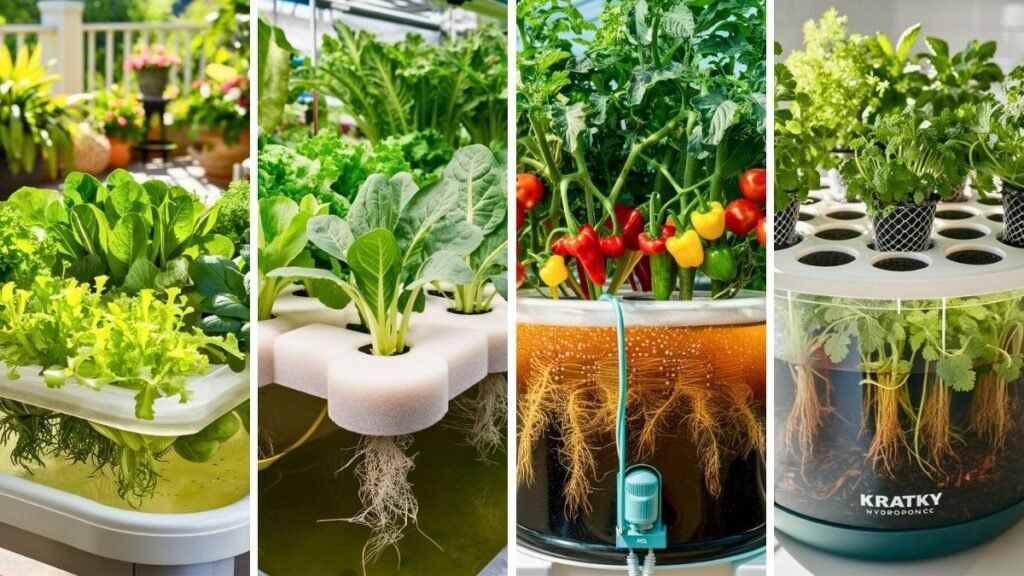
At the simplest level, participants learn that hydroponics means growing plants in a nutrient-rich water solution rather than soil. But the better insight is that hydroponics teaches systems thinking. Once you remove soil, everything becomes more visible: nutrient delivery, root oxygenation, water flow, spacing, light, and environmental control. A participant is no longer just “watering a plant.” They are seeing how inputs are managed in a controlled growing system. That is exactly why hydroponics has become important in controlled-environment agriculture used by hobbyists, schools, and commercial farms alike.
The sustainability angle is also real, but it needs to be explained carefully. Hydroponics and broader controlled-environment agriculture can use far less water than conventional farming because water is recirculated rather than lost through runoff and soil absorption. The U.S. National Park Service notes that hydroponic systems can use as much as 10 times less water than traditional field watering methods, while a 2025 Nature perspective reports water use in controlled-environment agriculture at roughly 4.5% to 16% of conventional farming per unit mass of produce. At the same time, that same Nature paper stresses a crucial caveat: indoor growing systems can be energy-intensive and can carry a high carbon footprint if not designed well.
That is why a good hydroponics workshop should not romanticise the technology. The real educational value is in showing both the promise and the trade-off. Hydroponics is efficient in water use, strong for controlled production, and highly relevant in land-scarce cities. But it also depends on good system design, monitoring, and energy choices. That balanced understanding is more useful than the common oversimplified message that hydroponics is automatically “the future of farming.”
Why hands-on learning makes this workshop more effective than a lecture
There is strong evidence that experiential learning works particularly well for science-style subjects, which helps explain why this workshop format is compelling. A 2024 rapid evidence assessment highlighted by UCL reviewed 44 peer-reviewed studies and found strong links between experiential learning and improvements in science and maths performance, as well as gains in problem-solving, critical thinking, memory, motivation, and engagement. For a topic like hydroponics, that matters because the difference between “hearing about nutrient solution” and physically assembling a system is the difference between passive familiarity and actual comprehension.
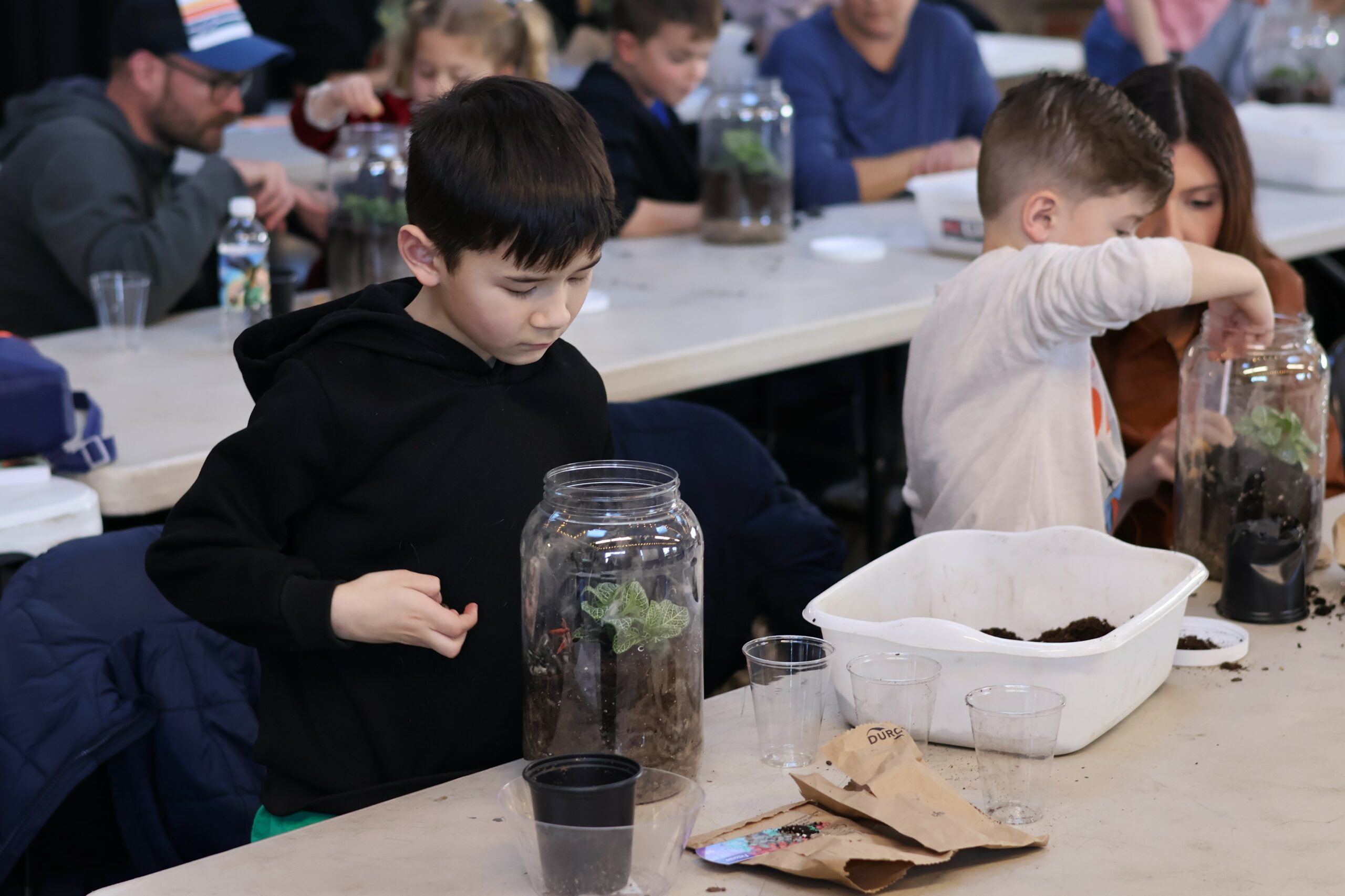
That is also where Ecoponics’ format makes sense. Its workshop description repeatedly emphasizes hands-on learning and direct interaction with the equipment. For younger learners especially, this turns food security from an abstract national policy topic into something visible: roots, pods, water, nutrients, and plant growth. In a Singapore context, that is a meaningful shift. It helps participants connect national food resilience to the mechanics of local production.
What the workshop does well, and what it does not try to do
The strongest part of the Ecoponics workshop is that it appears to respect the beginner. It does not assume prior farming knowledge. It gives people a manageable entry point into urban farming, and it anchors the session in Singapore’s food context rather than treating hydroponics like a novelty gadget. For schools, that alignment is especially useful because it matches science, sustainability, and civic relevance in one session.
What it does not appear to be is advanced technical training. Based on Ecoponics’ own description, this is not a professional grower certification, a commercial-farm operations course, or a deep technical workshop on sensors, lighting optimisation, fertigation software, or cost modelling. That is not a weakness. It is simply important to understand the product correctly. The workshop is best read as an introductory urban farming experience with practical educational value, not as a professional hydroponics bootcamp.
Who gets the most value from this kind of workshop
- Schools and student groups get the clearest benefit because the workshop naturally combines science, sustainability, and Singapore food-security awareness in one hands-on format.
- Parents and community groups benefit when they want a beginner-friendly introduction that makes urban farming feel approachable rather than technical.
- Corporate teams get the most value when the goal is shared learning or purposeful team bonding, not just entertainment.
- Sustainability-focused organisations can use the workshop as an accessible starting point before moving into deeper conversations about local sourcing, controlled-environment agriculture, or food waste.
How to make the session more valuable than just 90 minutes
- Pair the workshop with a follow-up growing activity so participants can observe germination, maintenance, and early troubleshooting.
- Ask for discussion time on Singapore’s current food strategy, not only the older “30 by 30” framing.
- Use the workshop as an entry point to discuss trade-offs too, especially energy use, operating costs, and what hydroponics can realistically grow well.
- For schools, connect the session to science reflection work: nutrients, root systems, controlled environments, and resource efficiency.
- For companies, tie the workshop to a wider ESG or workplace sustainability programme so the session has life beyond the event day.
Final thoughts
The Ecoponics hydroponics workshop experience in Singapore works because it sits at the intersection of three things that matter right now: food resilience, practical sustainability, and hands-on learning. In a country that still imports more than 90% of its food, is planning more large-scale indoor vertical farm capacity in 2025 and 2026, and is refining its local production strategy for 2035, hydroponics is not a niche topic. It is part of a bigger national conversation about what smart, space-efficient food systems should look like.
What Ecoponics seems to do well is make that conversation tangible. Participants do not just hear that hydroponics matters; they see how a soilless growing system is assembled, what inputs it needs, why it can be efficient, and where its limits are. That is the real value of the experience. It turns urban farming from a trend into an understandable system. And in Singapore’s case, that kind of literacy may matter almost as much as the vegetables themselves.
FAQs
What is the Ecoponics hydroponics workshop in Singapore?
It is a hands-on learning session that introduces participants to hydroponics, urban farming, and food security concepts.
Who can join the Ecoponics hydroponics workshop?
Beginners, students, children, community groups, and corporate teams can all take part.
Do participants need any farming experience before joining?
No, the workshop is designed for beginners and does not require prior knowledge.
How long does the workshop usually last?
The session typically runs for about 1 to 1.5 hours.
What do participants learn during the workshop?
They learn how hydroponics works, how vegetables grow without soil, and why urban farming matters in Singapore.
Why is hydroponics important in Singapore?
It helps address land limits, supports local food production, and improves food resilience.
Is the workshop only about theory?
No, it includes practical activities so participants can interact directly with the hydroponic system.